KIRTAN
MEANING
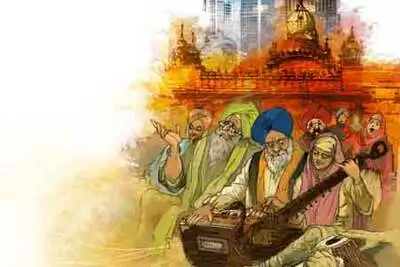
Kirtan means singing the divine hymns of gurbani, usually with musical instruments to remember waheguru ji and to connect inner spirit with the true god and understand the teachings of gurbani explained in the SRI GURU GRANTH SAHIB JI. Kirtan teaches us Love, humility, peace, equality and devotion.It reminds us to live a truthful life and remember waheguru in our daily activities.
ORIGIN AND TRADITION
The tradition of Shabad Kirtan was initiated by the First guru Sri Guru Nanak Dev Ji, in the 15th century. Along with Bhai Mardana ji they sang the divine hymns while Mardana ji plays Rabab ( a stringed instrument ). Further the sikh Gurus expanded this tradition by composing shabads. with strict guidelines and with unique instruments to preserve the purity of the almighty.
RAGAS AND TAALS
Unlike ordinary music, shabad kirtan is highly structured and followed with guidelines and rooted with the classical music. some ragas and rhythms are used to sing the divine hymns.
SRI GURU GRANTH SAHIB JI are intentionally organized into 31 main ragas ( and upto 60 total including sub- raags or variations).
Raags are strictly bound to specific times of day. Gurbani raags are chosen to evoke the spiritual mood ( bhav) and emotional context of the shabad(e.g., Aasaa for inspiration and courage, raag Gujri for mortality, Sri Raag for serious contemplation).
Major Raags include: Sri Raag, Maajh, Gauri, Aasaa, Gujri, Sorath, Dhanasari, Jaitsri, Sarang, Malhar, Devgandhari, Bihagra, Vadhans, Todi, Bairari, Tilang, Suhi, Bilawal, Gond,
Ramkali, Nat Narayan, Mali Gaura, Maru, Tukhari, Kedara, Bhairav, Basant, Kanra, Kalyan, Prabhati, Jaijaiwanti.
TAAL represents the framework of time( Laya) that cradles the soaring melody of the Raga. It refers to the rhythmic cycle that provides a musical structure to Gurbani kirtan. It helps to maintain rhythm and coordination between the Rabab, Tabla, Harmonium and the singing of Gurbani.
Major Taals used in Gurbani Kirtan
Teen Taal
16 beats ( maatras),four divisions of four beats
commonly used in classical music and kirtan
Keharwa Taal
8 beats,two divisions of four beats
has simple and flowing rhythm
Dadra Taal
6 beats, two divisions of three beats
gives gentle, melodic feel
Rupak Taal
7 beats,three divisions( 3+2+2)
has distinctive rhythmic pattern
Ektaal
12 beats,six divisions of two beats
used in classical compositions
Chautaal
12 beats, six divisions of two beats
associated with drupad style music
IMPORTANCE OF KIRTAN IN SIKHISM
Spiritual Connection
Kirtan helps devotees connect with waheguruji through Gurbani.
Peace of Mind
It brings peace, positivity, and calmness to the mind. It erodes the spiritual and mental illness of countless lifetimes bringing ultimate peace (sahaj) to an anxious mind.
Unity & Equality
It brings people together regardless of caste, status or background. By anchoring the mind on the shabad ( the divine word) , the devotee moves away from self centeredness (haumai) towards spiritual liberation (mukti).
Guru’s Teachings
It spreads the message of Gurbani and righteous living.
Clears negativity and karma
Chanting holy names helps destroy deep seated mental stress, doubt, laziness and negative karmic impressions from past actions.
Easier form of meditation
unlike silent meditation or difficult yoga poses, kirtan is simple and accessible to everyone in the current kalyugi age
Engages the mind with Melody
musical mantras keeps the active mind focussed on uplifting thoughts rather than worldly distractions.
The Sangat
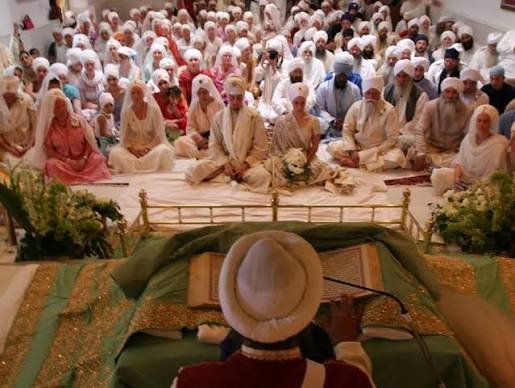
The Kirtan invites participation, the entire congregation sits together on the floor to listen, internalise and frequently sing along with beings the sense of brotherhood, feeling of Oneness.
SANGAT
ਸਤਸੰਗਤਿ ਕੈਸੀ ਜਾਣੀਐ ॥ਜਿਥੈ ਏਕੋ ਨਾਮੁ ਵਖਾਣੀਐ ॥
Meaning: True holy congregation is where the Name of the One Almighty is remembered and discussed.
MEANING
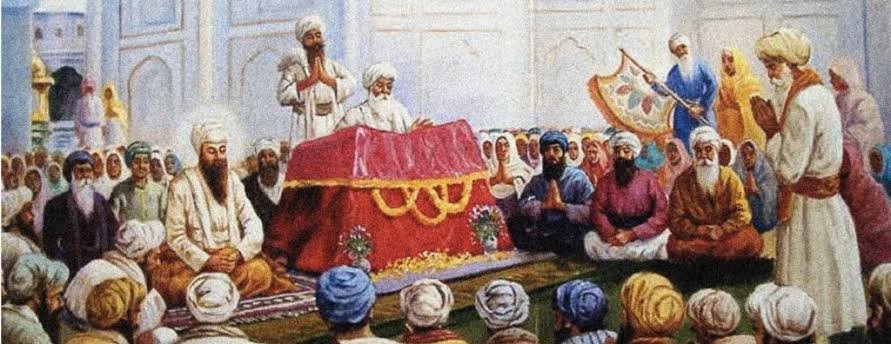
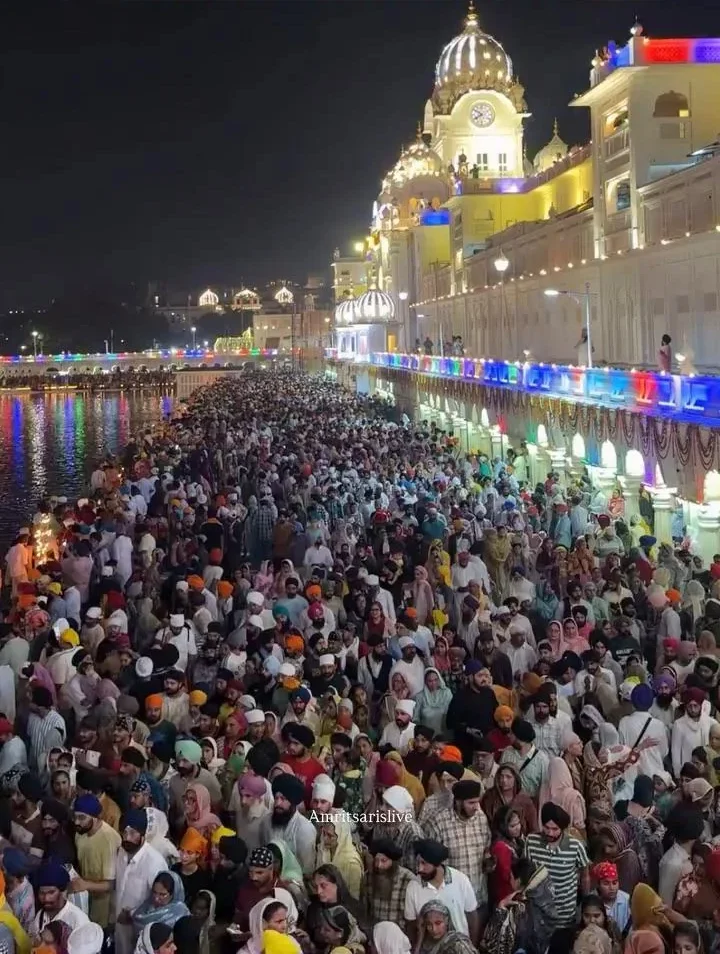
Sangat refers to the holy congregation of people who come together remember waheguru, listen to Gurbani, participate in Kirtan, and to follow the teachings of their Guru and learn to live their life in divine’s will (hukum).
In Sikhism Sangat plays an important role in spiritual growth. It encourages individuals to develop good values, practice humility( nimarta), share love and kindness and serve humanity.
The concept of Sangat teaches that everyone is equal in the eyes of waheguru ji.
ORIGIN AND TRADITION
The tradition of Sangat began during the time of Guru Nanak Dev Ji, the founder of Sikhism (1469–1539).
Guru Nanak Dev Ji taught that all human beings are equal and that everyone should come together to remember God and live a truthful life.
Guru Nanak Dev Ji: Established the foundation of Sangat by bringing people together through devotional singing, spiritual discussions, and remembrance of Waheguru.
Guru Angad Dev Ji: Continued and strengthened the tradition of Sangat, encouraging discipline, education, and community participation.
Guru Amar Das Ji: Further developed the institution of Sangat and emphasized the importance of Pangat (sitting together and eating in equality).
Guru Ram Das Ji: Strengthened the Sikh community and developed the settlement of Ramdaspur, which later became Amritsar.
Guru Arjan Dev Ji: Encouraged collective worship and established the Harmandir Sahib as an important spiritual centre for the Sikh community
IMPORTANCE OF SANGAT AND PANGAT IN SIKHISM
SANGAT
spiritual togetherness
- Remembering Waheguru ji together
- Listening to Gurbani
- Learning good values
- Developing humility(nimarta)
PANGAT
Equality & Togetherness
- sitting together in rows
- sharing Langar
- No discrimination amongany
- Practising equality
“Sangat brings people together in devotion, while Pangat brings people together in Equality.”
KIRTAN AT SRI HARMANDIR SAHIB
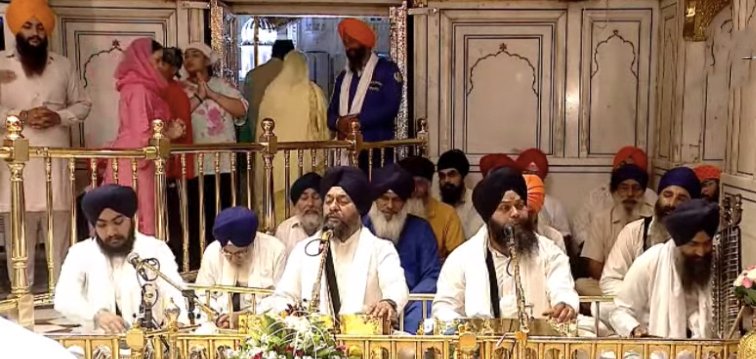
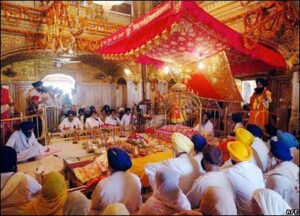
Sri Harmandir Sahib, also known as Golden Temple, is one of the most sacred places in Sikhism. Gurbani Kirtan is performed here as a part of daily worship.
The spiritual atmosphere, melodious hymns, and devotion of the congregation create a deeply peaceful experience, people from different backgrounds visit this sacred place to listen to Gurbani and seek spiritual inspiration.
Musical instruments of Kirtan
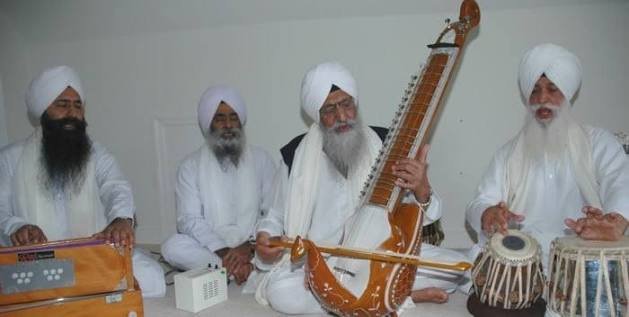
- Rabab: A plucked string instrument originally popularised by Bhai Mardana.
- Dilruba / Taus / Sarangi: Bowed, short-necked stringed instruments designed to closely mimic the emotional inflections of the human singing voice
- major instruments used are:
- Mridanga (or Khol):
- Kartals (or Talas)
- Tabla
- Bansuri
- Tanpura
- Harmonium
. Importance of Musical Instruments in Sikh Kirtan
Spiritual Connection: Instruments help create a peaceful atmosphere for remembering Waheguru.
Rhythm and Melody: They support the correct rhythm (Taal) and musical framework (Raag).
Preservation of Tradition: Traditional instruments preserve the historical musical heritage of Sikhism.
Emotional Expression: Their melodies help express the spiritual message and emotions of Gurbani.
Modern commonly used instruments
Harmonium Electronic Tanpura Keyboard Digital music systems Tabla
Role of Ragi Jatha
Ragi Jatha holds a very important place in Sikhism because it spreads the teachings of Sikh Gurus through the devotional singing of Gurbani (sacred hymns). Ragi Jathas play a significant role in Sikh religious services, especially in Gurdwaras, where they perform Kirtan to connect the Sangat (congregation) with the spiritual message of Sri Guru Granth Sahib Ji.
Ragi: A person who sings or performs devotional music, particularly Gurbani Kirtan.
Jatha: A group or team of people.
Major Roles of Ragi Jatha
1. Performing Gurbani Kirtan
2. Spreading the Teachings of Sikh Gurus
3. Promoting Sikh Musical Heritage
4. Leading Congregational Worship
5. Creating Spiritual Awareness
- 6. Preserving the Raag Tradition
Ettiquette of Sangat
In Sikhism, Sangat (ਸੰਗਤ) means the holy congregation or gathering of Sikh devotees who come together to remember Waheguru, listen to Gurbani, participate in Kirtan and learn the teachings of the Gurus.
Do’s and Don’ts in Sangat
Do’s | Don’ts |
|---|---|
Maintain silence and discipline | Avoid loud conversations |
Respect everyone | Do not discriminate |
Listen to Gurbani | Do not disturb Kirtan |
Participate in Seva | Do not show pride or ego |
Keep the premises clean | Do not litter |
Sit respectfully | Do not use mobile phones unnecessarily |
LET GURBANI FILL YOUR HEART WITH PEACE
Join the spirit of Sangat, listen to the divine words of Gurbani, and discover the path of Love, Humility, and devotion.
Waheguru Ji ka Khalsa, Waheguru Ji ki Fateh